
Purchasing real estate on the San Francisco Peninsula is a major financial milestone.
With major employment centers, established communities, convenient transit connections, and access to both coastal and outdoor recreation, San Mateo County continues to attract buyers despite its high housing costs.
For buyers in 2026, the decision is not simply about finding the right neighborhood. It is also about choosing a property type that fits your finances, lifestyle, maintenance preferences, and long-term plans.
This guide explores condos vs single family homes in San Mateo County, including purchase prices, HOA costs, maintenance responsibilities, insurance, property taxes, and potential resale considerations.
Comparing Condos vs. Single-Family Homes in San Mateo County
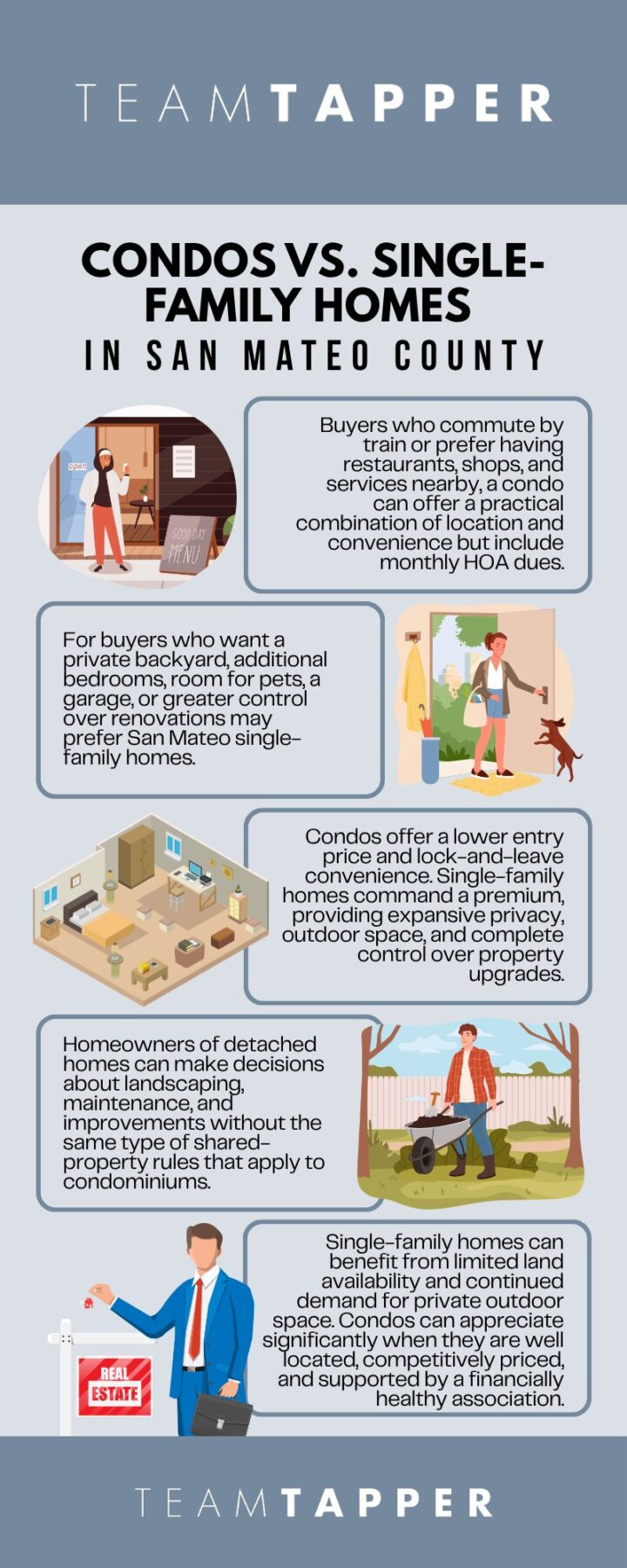
When comparing condos vs single family homes in San Mateo County, the main difference lies in pricing and maintenance. Condos offer a lower entry price and lock-and-leave convenience but include monthly HOA dues. Single-family homes command a premium, providing expansive privacy, outdoor space, and complete control over property upgrades.
Choosing Between a Condo and a House in San Mateo County
Lifestyle and Commute Priorities
Choosing between a condo and a house in San Mateo County often starts with how you spend your typical week.
For buyers who commute by train or prefer having restaurants, shops, and services nearby, a condo can offer a practical combination of location and convenience.

Caltrain serves communities including San Mateo, Belmont, San Carlos, and Redwood City, providing rail connections along the Peninsula and toward San Francisco and the South Bay.
Downtown San Mateo and downtown Redwood City are examples of areas where residents can combine transit access with nearby dining, shopping, entertainment, and other services.
This can be particularly appealing to professionals who spend long hours commuting or traveling and would rather spend less time maintaining a property.
The Desire for Space
Space can change the equation.
Buyers who want a private backyard, additional bedrooms, room for pets, a garage, or greater control over renovations may prefer San Mateo single-family homes.
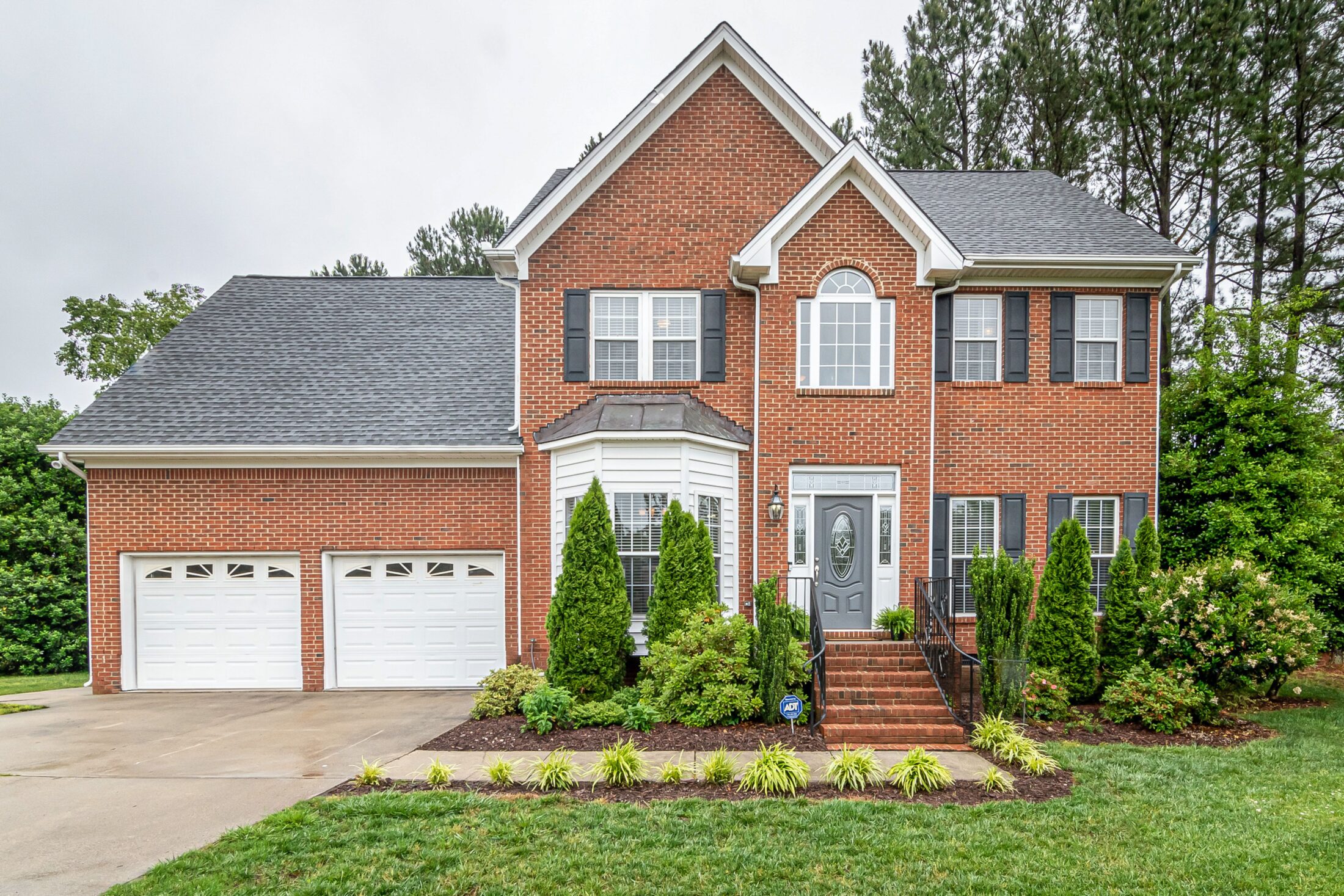
Established residential neighborhoods in communities such as Belmont and San Carlos offer many detached properties with private outdoor areas and greater separation from neighboring homes.
The trade-off is responsibility. A larger property generally means the homeowner is responsible for more landscaping, exterior surfaces, plumbing, roofing, pest control, and other maintenance.
Evaluating San Mateo County Housing Prices in 2026
Market Entry Points
San Mateo County housing prices vary substantially by city and property type.
Condos often provide a lower-priced entry point than comparable detached homes, particularly for buyers who prioritize location over lot size. However, that does not mean every condo is inexpensive.

A newer condo in a desirable location with parking, views, amenities, and a well-funded HOA can command a substantial price.
When comparing properties, buyers should look beyond the purchase price and calculate the complete monthly cost. That includes the mortgage payment, property taxes, insurance, HOA dues where applicable, utilities, and a realistic allowance for maintenance and repairs.
Long Term Appreciation
It is important not to assume that one property type will always appreciate faster than the other.
Single-family homes can benefit from limited land availability and continued demand for private outdoor space. Condos can also appreciate significantly, particularly when they are well located, competitively priced, and supported by a financially healthy association.

Actual appreciation varies by neighborhood, property characteristics, market conditions, and the period being measured.
For that reason, buyers considering future resale value should examine recent comparable sales and neighborhood-level trends rather than relying on a blanket assumption that single-family homes will always outperform condos.
Navigating San Mateo County Condo Buying Costs
Upfront Fees and Dues
When calculating San Mateo County condo buying costs, the purchase price is only part of the financial picture.
Condo owners generally pay monthly HOA dues. These payments help fund services and maintenance specified by the association’s governing documents.
Depending on the community, HOA dues may contribute toward common-area maintenance, landscaping, building insurance, amenities, utilities, management, and reserve funding.

There is no reliable single HOA fee that represents all condos in San Mateo County in 2026. Costs can vary significantly depending on the building’s age, amenities, size, insurance expenses, maintenance requirements, and financial reserves.
Buyers should therefore obtain the actual HOA budget and fee schedule for the property they are considering. HOA dues are also relevant when assessing mortgage affordability because recurring housing expenses are considered in mortgage underwriting and debt-to-income calculations.
Special Assessments
Monthly dues are not the only potential HOA expense.
A condominium association may levy a special assessment when additional funds are required for major repairs, unexpected expenses, or other association obligations.
During escrow, buyers should carefully review available HOA financial documents, including budgets, reserve information, meeting minutes, insurance information, governing documents, and notices concerning existing or proposed special assessments.
A low monthly HOA fee is not automatically a financial advantage. An association with inadequate reserves may face greater pressure to raise dues or impose assessments when significant work becomes necessary.
Analyzing Single-Family Home Ownership Expenses
The True Cost of Independence
One of the major benefits of owning a detached home is greater control over the property.
In many cases, homeowners can make decisions about landscaping, maintenance, and improvements without the same type of shared-property rules that apply to condominiums.
That independence comes with additional financial responsibility.
Single-family home ownership expenses can include roof maintenance and replacement, plumbing repairs, electrical work, HVAC servicing, water-heater replacement, landscaping, pest control, exterior painting, driveway maintenance, and appliance replacement.
These expenses do not occur on a predictable monthly schedule. A homeowner might spend relatively little on repairs for several years and then face a major expense unexpectedly.
A sensible budget should therefore include an emergency fund and a separate allowance for long-term maintenance.

Insurance Differences
Insurance is another important distinction.
Condominium owners generally purchase an individual unit-owner policy, commonly an HO-6 policy. The policy can cover personal property, personal liability, loss of use, and certain portions of the unit or improvements, depending on the policy.
The condominium association typically maintains a master insurance policy for covered common areas and, depending on the governing documents and policy, portions of the building or residential structures.
The exact division of responsibility is important. Buyers should review the HOA’s governing documents and insurance information rather than assuming that every exterior or interior component is covered by the association.
Single-family homeowners generally purchase a homeowners insurance policy that provides coverage for the dwelling, other covered structures, personal property, and liability, subject to the policy’s terms, exclusions, and limits.
Insurance costs vary by property and insurer, so buyers should obtain an insurance quote before making a final purchasing decision.
HOA Fees vs Home Maintenance Costs Comparison
The difference between HOA fees vs home maintenance costs is largely about how expenses are organized and who is responsible for them.
| Expense Category | San Mateo County Condo | San Mateo Single Family Home |
|---|---|---|
| Predictability | Regular HOA dues provide a recurring expense, but dues can increase, and special assessments may occur | Maintenance expenses can be irregular and may be difficult to predict |
| Exterior Upkeep | Common-area and certain exterior maintenance is typically handled by the HOA, subject to governing documents | Generally, the homeowner's responsibility |
| Insurance Policy | Individual unit-owner/HO-6 coverage generally works alongside the HOA's master insurance policy | Individual homeowners' insurance generally covers the dwelling and other covered structures |
| Financial Risk | Potential for HOA fee increases and special assessments | Potential for unexpected repair and replacement expenses |
| Single-family home ownership expenses | Owners remain responsible for the costs assigned to their unit under the governing documents, while the HOA handles specified shared expenses | Homeowners generally pay directly for property maintenance and repairs |
| Overall Cost Factor | San Mateo County condo buying costs include purchase price, HOA dues, property taxes, insurance, financing, and potential assessments | Costs include purchase price, property taxes, insurance, financing, utilities, maintenance, repairs, and improvements |
| HOA fees vs home maintenance costs | Shared expenses can make some maintenance costs more predictable, but HOA dues are ongoing | There may be fewer shared-property fees, but the owner carries more direct responsibility for maintenance |
The most useful comparison is not simply “HOA versus no HOA.” Buyers should calculate the expected total cost of ownership for each property and consider the financial risks that come with it.
Align Your Investment with Your Routine
Successfully navigating the Peninsula real estate market requires more than comparing listing prices.
Start by reviewing San Mateo County housing prices, then calculate the complete cost of owning each property you are considering.
For a condo, that means looking at San Mateo County condo buying costs, including HOA dues, insurance, property taxes, and the potential for special assessments.
For a detached home, account for single-family home ownership expenses, including routine maintenance and the possibility of major repairs.
For personalized guidance on San Mateo County housing prices, available properties, HOA documents, and the total cost of ownership, feel free to contact our team at (650) 629-9898 or teamtapper@gmail.com.
Frequently Asked Questions
They can be, depending on the property and the buyer’s goals. Condos can provide a more accessible entry point than comparable single-family homes and may offer convenient locations near public transportation, employment centers, restaurants, and retail.
There is no single reliable countywide average for 2026 that accurately represents all condos in San Mateo County. HOA dues can vary considerably according to the building’s age, size, amenities, insurance expenses, maintenance requirements, services, and reserve funding.
Not necessarily. Single-family homes can benefit from limited land availability and demand for private outdoor space, but condo appreciation also varies substantially according to location, building quality, HOA finances, amenities, and market conditions.
Common expenses include roof repairs or replacement, plumbing and electrical work, HVAC maintenance, water-heater replacement, landscaping, pest control, exterior painting, driveway repairs, appliance replacement, and other unexpected maintenance.
California’s general property-tax rate is 1% of assessed value, with additional voter-approved bonded indebtedness and other charges potentially added. Because condos and single-family homes generally sell at different prices, their actual property-tax bills can differ substantially.
New multifamily and condominium development is occurring in several Peninsula communities, particularly along established transit and commercial corridors. The City of San Mateo’s development information, for example, identifies a project at 230 S. El Camino Real that includes 28 for-sale condominium units, including four affordable units. Redwood City has also experienced significant residential development in and around its downtown area.
Some costs and transaction terms can be negotiated, depending on the property, seller, financing, and market conditions. A buyer may be able to negotiate the purchase price, credits, repairs, or other contractual terms. HOA dues themselves are generally established by the association rather than negotiated directly with the seller. However, a seller may agree to contribute toward certain eligible transaction costs or credits as part of the overall purchase agreement.